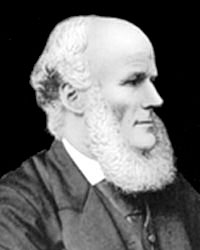
The Call of God
C. H. Mackintosh
In a day of such widely extended profession as the present, it is specially important that Christians should be deeply impressed with the need to realize personally the call of God, without which there can be no permanency or steadiness in the Christian course.
It is comparatively easy to make a profession at a time when profession prevails; but it is never easy to walk by faith — it is never easy to give up present things, in the hope of "good things to come". Nothing but that mighty principle which the apostle denominates "the substance of things hoped for, the evidence of things not seen" (Hebrews 11:1), can ever enable a man to persevere in a course which, in a world where all is wrong — all out of order, must be thorny and difficult. We must feel "persuaded" of something yet to come — something worth waiting for — something that will reward all the toil of a Christian's protracted course, ere we rise up out of the circumstances of nature and the world, to "run with patience the race that is set before us" (Hebrews 12:1).
All this is fully exemplified in Abraham, whose example receives additional force from the contrast exhibited in the character of Lot and others who are introduced in the course of the narrative.
In Acts 7, verses 2 and 3, we have the following words which bear directly upon the subject before us: "The God of glory appeared unto our father Abraham, when he was in Mesopotamia, before he dwelt in Charran, and said unto him, Get thee out of thy country and from thy kindred, and come into the land that I shall show thee". Here then we are presented with the first dawning of that light which attracted Abraham out of the darkness of "Ur, of the Chaldees", and which shining in upon his wearisome path, from time to time, gave fresh vigor to his soul, as he journeyed in quest of "that city which hath foundations, whose builder and maker is God". "The God of glory" caused Abraham to see, in the light of His character, the true condition of things in Ur, and further, to believe, as one has observed, a report concerning future glory and inheritance, and he therefore hesitates not, but instantly girds himself up for the journey.
However, upon closely comparing the opening of Acts 7, with the first verse of Genesis 12, we get an important principle. From the time that God appeared unto Abraham, until he finally gets up into the land of Canaan, an event occurs involving much deep instruction to us. I allude to the death of Abraham's father, as we read in Acts 7. "From thence, when his father was dead, He removed him into this land wherein ye now dwell" (verse 4). This will enable us to understand the force of the expression in Genesis 12, "The Lord had said unto Abram", etc. (verse 1).
From both these passages, it would plainly appear the movement made by Terah and his family, recorded in Genesis 10:31, was the result of a revelation made by "the God of glory" to Abram, but it would not appear that Terah had received any such revelation from God. He is presented to us rather as a hindrance to Abram than any thing else, for until he died, Abram did not come into the land of Canaan — his divinely appointed destination.
Now this circumstance, trivial as it may seem to a cursory reader, confirms in the strongest manner the statement already advanced, namely, that unless the call of God — the revelation from "the God of glory" be personally realized, there can be no permanency or steadiness in the Christian course. Had Terah realized that call, he would neither have been a clog to Abram in his path of faith, nor yet would he have dropped off, like a mere child of nature, ere reaching the future land of promise. ...
In the conversion of Saul of Tarsus, we are taught the same truth. There were other persons with him when he was struck to the ground by the lustre of the glory of the Lord Jesus; these persons "saw indeed the light" — they witnessed many of the external circumstances which had arrested the furious zealot; but as he himself states, "they heard not the voice of Him that spake to me" (Acts 22:9.) Here is the grand point. The voice must speak "to me" — "the God of glory" must appear "to me", ere I can take the place of a pilgrim and stranger in the world, and perseveringly, "run the race that is set before me". It is not national faith, nor family faith, but personal faith that will constitute us real witnesses for God in the world.
But when Abram was released from the clog which he had experienced in the person of his father, he was enabled to enter with vigor and decision upon the path of faith — a path which "flesh and blood" can never tread — a thorny path beset with difficulties from first to last, in which God alone can sustain the soul. "And Abram passed through the land unto the place of Sichem, unto the plain of Moreh. And the Canaanite was then in the land. And the Lord appeared unto Abram, and said, "Unto thy seed will I give this land: and there builded he an altar unto the Lord who appeared unto him" (Genesis 12:6,7). Here Abram at once takes his stand as a worshiper, in the face of "the Canaanite". The altar marks him as one who, having been delivered from the idols of Ur of the Chaldees, had been taught to bow before the altar of the one true God, "who made heaven and earth". In the following verse, we get the second grand feature in the character of the man of faith, namely, "the tent", denoting strangership in the world. "By faith he sojourned in the land of promise, as in a strange country, dwelling in tabernacles with Isaac and Jacob, the heirs with him of the same promise" (Hebrews 11:9).
We shall notice more fully, as we proceed, these two important points in Abraham's life, and shall therefore rest satisfied for the present with establishing that the tent and the altar clearly present him to us as a stranger and a worshiper, and that as such, he was a man entirely separated from the course of this evil world.
Scarcely had Abram entered upon his course when he had to encounter one of those difficulties which have a special tendency to test the genuineness of faith, both as to its quality and its object. "And there was a famine in the land". The difficulty meets him in the very place into which the Lord had called him. Now, it is no easy matter when we perceive trial and sorrow, privation and difficulty awaiting us, while walking in "the strait and narrow way", still to persevere — still to pursue the onward path, and especially if we observe within our reach, as Abram did, an entire exemption from the particular trial under which we may be smarting. The men of this world "are not in trouble as other men, neither are they plagued as other men". This feeling is still further increased by the entire absence of everything, as far as sight is concerned, which could act as a confirmation of our hope. Abram had not so much as to set his foot upon — famine was raging around him on every side, save in Egypt. Could he only find himself there, he would be able to live in ease and abundance.
Here, however, the man of faith must pursue the path of simple obedience. God had said, "Get thee out of thy country ... unto a land that I will show thee". Abram may, it is true, afterward discover that obedience to this command will involve his abiding in a land where nothing but starvation, apparently, awaits him. But even though it should be so, God had not in any way qualified the command. No, the word was simple and definite: "Into a land that I will show thee". This should have been as true and as binding upon Abram when famine reigned around him, as when peace and abundance prevailed. Famine should not have induced him to leave the land, nor should abundance have induced him to remain. The influential words were, "I will show thee".
But Abram leaves this land — he succumbs, for the moment, to the heavy trial, and bends his footsteps down to Egypt, leaving behind him his tent and altar. There he obtained ease and luxury; he escaped, no doubt, the formidable trial under which he had suffered in the land of promise; but he lost, for the time being, his worship and strangership, — things which should ever be dearest to the heart of a pilgrim.
There is nothing in Egypt for Abram to feed upon as a spiritual man; it might, and doubtless did, afford abundance for him as a natural man, but that was all. Egypt would give nothing to Abram unless he sacrificed his character both as a stranger and as a worshiper of God. It is needless to observe that it is exactly so at this very hour. There is plenty in the world upon which our old nature could feed most luxuriously. There are the rich delights "of the flesh and of the mind", and abundant means of gratifying the desires of the heart, but what of all these, if the enjoyment thereof leads, as it must necessarily do, right out of the path of faith — the path of simple obedience.
Here then is the question for the Christian: which shall I have, the gold and silver, the flocks and herds — the present ease and affluence of Egypt, or the tent and altar of "the land of promise"? Which shall I have: the carnal ease and delight of the world, or a peaceful holy walk with God here, and eternal blessedness and glory hereafter? We cannot have both, for "if any man love the world, the love of the Father is not in him".
Extract from Miscellaneous Writings, by C. H. Mackintosh.