Rivers of Living Water
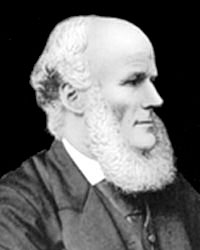
C. H. Mackintosh
"In the last day, that great day of the feast, Jesus stood and cried, saying, If any man thirst, let him come unto me and drink. He that believeth on me, as the scripture hath said, out of his belly shall flow rivers of living water". John 7:37-38.
The feast referred to in this lovely scripture was "The feast of tabernacles", called, at the opening of the chapter, "The Jews' feast". This stamped its character. It could no longer be called, as in Leviticus 23, "A feast of Jehovah". The Lord could not own it. It had become an empty formality — a powerless ordinance — a piece of barren routine — something in which man could boast himself while God was entirely shut out.
This is nothing uncommon. There has ever been a strong tendency in the human mind to perpetuate forms when the power is gone. No doubt power may clothe itself in a certain form; and, so long as the form is the expression of the power, it is all right and good. But the danger lies in going on with the mere outward form without a single particle of inward power. Thus it was with Israel of old; and thus it is with the professing church now. We have all to watch against this snare of the devil. He will use a positive ordinance of God as a means of deceiving the soul, and shutting out God altogether. But where faith is in lively exercise, the soul has to do with God in the ordinance, whatever it is, and thus the power and freshness are duly maintained.
The reader has, no doubt, noticed that in the opening chapters of John's Gospel, the inspired writer invariably designates the feasts as feasts of the Jews; and not only so, but we find the Lord Jesus displacing one after another of these feasts and offering Himself as an object for the heart. Thus at the opening of chapter 7, we read, "After these things Jesus walked in Galilee; for he would not walk in Jewry, because the Jews sought to kill him. Now the Jews' feast of tabernacles was at hand". Terrible anomaly! deadly delusion! Seeking to murder the Son of God, and yet keeping the feast of tabernacles! Such is religious man without God. "His brethren therefore said unto him, Depart hence, and go into Judea, that thy disciples also may see thy works that thou doest. For there is no man that doeth anything in secret, and he himself seeketh to be known openly. If thou do these things, shew thyself to the world. For neither did his brethren believe on him."
Near as His brethren were to Him, according to the flesh, they knew Him not, they believed not on Him. They would fain have Him make a display of Himself before the world. They knew not His object. He had not come from heaven in order to be gazed at and wondered after. "All the world will wonder after the beast" by-and-by; but the blessed Son of God came to serve and to give. He came to hide Himself, to glorify God, and to serve man.
He refused, therefore, to exhibit Himself at the feast. "Then Jesus said unto them, my time is not yet come; but your time is always ready. The world cannot hate you; but me it hateth, because I testify of it that the works thereof are evil. Go ye up unto this feast: I go not up yet to this feast: for my time is not yet full come. When he had said these words unto them, he abode still in Galilee. But when his brethren were gone up, then went he also up unto the feast, not openly, but as it were in secret."
And for what did He go up? He went up to serve. He went up to glorify His Father, and to be the willing Servant of man's necessity. "Now about the midst of the feast, Jesus went up into the temple and taught. And the Jews marvelled, saying, How knoweth this man letters, having never learned? Jesus answered them, saying, My doctrine is not mine, but his that sent me". Here His moral glory, as the self-hiding Servant, shines out. "My doctrine is not mine". Such was His answer to those who wondered where He got His learning. Alas! they knew Him not. His motives and His objects lay beyond the reach of carnal and worldly-minded men. They measured him by their own standard, and hence, all their conclusions were utterly false. "If any man will do his will he shall know of the doctrine, whether it be of God, or whether I speak of myself. He that speaketh of himself seeketh his own glory; but he that seeketh his glory that sent him, the same is true and no unrighteousness is in him."
The blessed One did not speak from Himself, as if He were independent of the Father, but as One who lived in absolute and complete dependence, and in unbroken communion, drawing all His springs from the living God, doing nothing, saying nothing, thinking nothing apart from the Father.
We have the same truth with reference to the Holy Ghost, in John 16. "Howbeit, when he the Spirit of truth is come, he will guide you into all truth; for he shall not speak of himself; but whatsoever he shall hear, that shall he speak; and he will shew you things to come". The Holy Ghost did not speak from Himself, as independent of the Father and the Son, but as One in full communion with Them.
But we must turn, for a moment, to the words which form the special subject of this paper. "In the last day, that great day of the feast, Jesus stood and cried, saying, If any man thirst, let him come unto me and drink". Here we have set before us a truth of infinite preciousness and immense practical power. The Person of Christ is the divine spring of all freshness and spiritual energy. It is in Him alone the soul can find all it really needs. It is to Him we must betake ourselves for all our personal refreshment and blessing. If, at any time, we find ourselves dull, heavy and barren, what are we to do? Make efforts to raise the tone? Nay, this will never do. What then? Let him "Come unto me and drink."
Mark the words. It is not, "Come unto me and draw". We may draw for others and be dry ourselves; but if we drink, our own souls are refreshed, and then — "Rivers of living water".
Nothing is more miserable than the restless efforts of a soul out of communion. We may be very busy; our hands may be full of work; our feet may run hither and thither; the head may be full of knowledge; but if the heart be not livingly occupied with the Person of Christ, it will, it must be, all barrenness and desolation so far as we are personally concerned; and there will, there can be, no "rivers of living water" flowing out for others. Impossible. If we are to be made a blessing to others, we must feed upon Christ for ourselves. We do not "drink" for other people, we drink to satisfy our thirst; and as we drink, the rivers flow. Shew us a man whose heart is filled with Christ, and we will shew you a man whose hands are ready for work, and his feet ready to run; but unless we begin with heart communion, our running and our doing will be a miserable failure — there will be no glory to God — no rivers of living water.
Yes, reader, we must begin in the very innermost circle of our own moral being, and there be occupied, by faith, with a living Christ, else all our service will prove utterly worthless. If we want to act on others; if we would be made a blessing in our day and generation; if we desire to bring forth any fruit to God; if we would shine as lights amid the moral gloom around; if we would be a channel of blessing in the midst of a sterile desert, then, verily, we must hearken to our Lord's words in John 7:37. We must drink at the fountain head. And what then? Drink still — drink ever — drink largely, and then the rivers must flow. If I say, "I must try and be a channel of blessing to others", I shall only prove my own folly and weakness. But if I bring my empty vessel to the fountain head and get it filled, then, without the smallest effort, the rivers will flow.
Extract from Things New and Old, by C. H. Mackintosh.