Jesus the Christ, Job the Patriarch, and Jeremiah the Prophet
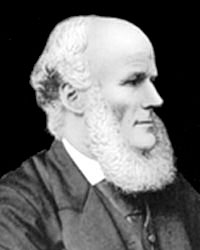
C. H. Mackintosh
The fairest and best of men must retire into the shade when tested by the perfect standard of the life of Christ. The light of His moral glory makes manifest the defects and blemishes of even the most perfect of the sons of men. "In all things He must have the pre-eminence." He stands out in vivid contrast with even a Job or a Jeremiah in the matter of patient submission to all that He was called upon to endure. Job completely breaks down under his heavy trials. He not only pours forth a torrent of bitter invective upon his fellows, but actually curses the day of his birth. "After this opened Job his mouth and cursed his day. And Job spoke and said, 'Let the day perish wherein I was born, and the night in which it was said, There is a man-child conceived'." (Job 3:1-3).
We notice the selfsame thing in Jeremiah—that blessed man of God. He, too, gave way beneath the heavy pressure of his varied and accumulated sorrows, and gave vent to his feelings in the following bitter accents: "Cursed be the day wherein I was born; let not the day wherein my mother bare me be blessed. Cursed be the man who brought tidings to my father, saying, 'A man- child is born unto thee'; making him very glad. And let that man be as the cities that the Lord overthrew, and repented not; and let him hear the cry in the morning, and the shouting at noontide. Because He slew me not from the womb; or that my mother might have been my grave, and her womb to be always great with me. Wherefore came I forth out of the womb to see labor and sorrow, that my days should be consumed with shame?" (Jeremiah 20:14-18).
What language is here! Only think of cursing the man that brought tidings of his birth! cursing him because he had not slain him! All this, both in the prophet and the patriarch, contrasts strongly with the meek and lowly Jesus of Nazareth. That spotless One passed through deeper sorrows and more in number than all His servants put together; but not one murmuring word ever escaped His lips. He patiently submitted to all; and met the darkest hour with such words as these, "The cup which My Father hath given Me, shall I not drink it?" Blessed Lord Jesus, Son of the Father, we adore Thee! We bow down at Thy feet, lost in wonder, love, and praise, and own Thee Lord of all—the fairest among ten thousand, and the altogether lovely!
There is no more fruitful field of study than that which is opened before us in the history of God's dealings with souls. It is full of interest, and abounds in instruction and profit. One grand object in those dealings is to produce real brokenness and humility—to strip us of all false righteousness, empty us of all self-confidence, and teach us to lean wholly upon Christ. All have to pass through what may be called the process of stripping and emptying. With some this process precedes, with others it follows, conversion or the new birth. Many are brought to Christ through deep plowings and painful exercises of heart and conscience—exercises extending over years, often over the whole lifetime. Others, on the contrary, are brought with comparatively little exercise of soul. They lay hold, speedily, of the glad tidings of forgiveness of sins through the atoning death of Christ, and are made happy at once. But the stripping and emptying come afterward, and, in may cases, cause the soul to totter on its foundation, and almost to doubt its conversion.
This is very painful, but very needful. The fact is, self must be learnt and judged, sooner or later. If it be not learnt in communion with God, it must be learnt by bitter experience in failures and falls. "No flesh shall glory in His presence;" and we must learn our utter powerlessness, in every respect, in order that we may taste the sweetness and comfort of the truth, that Christ is made of God unto us wisdom, righteousness, sanctification, and redemption. God will have broken material. Let us remember this. It is a solemn and necessary truth. "Thus saith the high and lofty One that inhabiteth eternity, whose name is Holy: I dwell in the high and lofty place, with him also that is of a contrite and humble spirit, to revive the spirit of the humble, and to revive the heart of the contrite ones." And again, "Thus saith the Lord, 'The heaven is My throne, and the earth is my footstool: where is the house that ye build unto Me? and where is the place of My rest? For all those things hath Mine hand made, and all those things have been, saith the Lord: but to this man will I look, even to him that is poor and of a contrite spirit, and trembleth at My word'." (Isaiah 57:15; 66:1-2).
These are seasonable words for all of us.
Extract from "Job and His Friends", by C. H. Mackintosh.